

Acting Minister of Local Government, Edward K. Mulbah, is pushing for stronger and productive partnership between the Government of Liberia and traditional authorities.
The Minister described traditional leaders as indispensable partners whose wisdom, leadership, and dedication continue to contribute significantly to peacebuilding, social cohesion, and grassroots development across the country.
Minister Mulbah made the remarks during a high-level engagement between President Joseph Nyuma Boakai, Sr., the traditional chiefs and local authorities of Grand Bassa County at the Superintendent Compound in Buchanan as part of activities commemorating Liberia’s 179th Independence Anniversary.
Under the stewardship of Minister Mulbah, the engagement provided an invaluable platform for traditional leaders to openly discuss issues affecting their communities while reaffirming their commitment to the national development agenda. He emphasized that the government remains steadfast in its resolve to deepen collaboration with chiefs and elders, whose continued services and influences remain vital to community empowerment, conflict resolution, and sustainable development.

The occasion was marked by a warm and colorful reception as traditional chiefs welcomed President Boakai and members of his delegation and performed customary traditional rites in honor of the President’s visit, reflecting the deep respect and appreciation they hold for the nation’s leadership.
Speaking on behalf of the traditional leadership, Chairman of the National Council of Chiefs and Elders, Chief Arthur Dowah, expressed profound gratitude to President Boakai for engaging directly with traditional authorities and demonstrating his commitment to inclusive governance. He reaffirmed the unwavering support of the traditional leadership for the government’s development priorities and pledged continued collaboration in advancing initiatives that improve the lives of citizens.
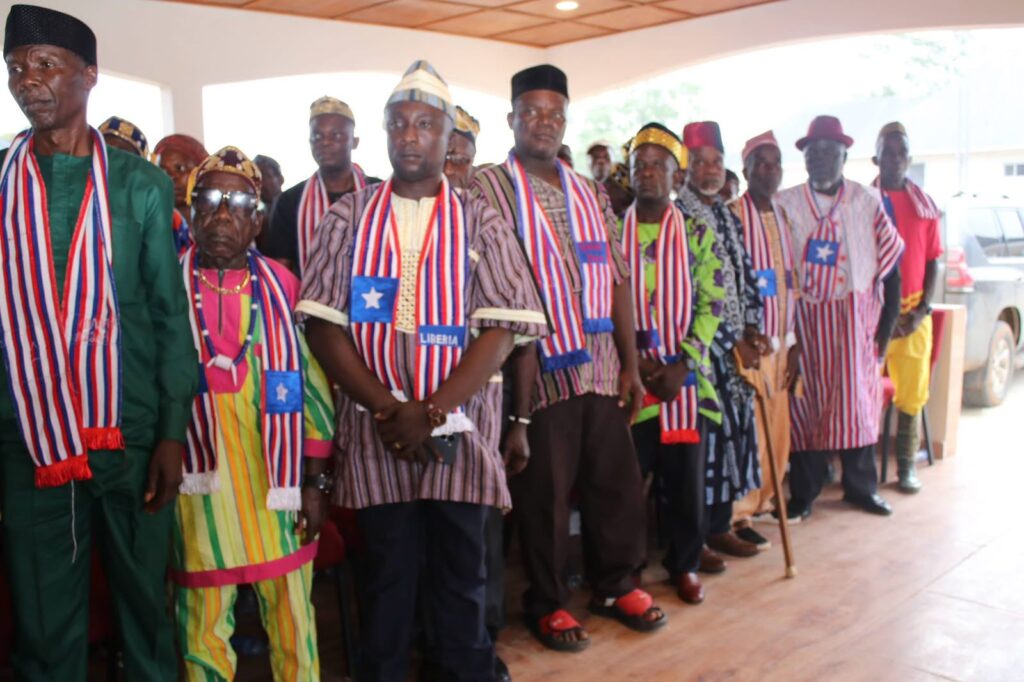
Chief Dowah further stressed that peace, unity, and cooperation remain the cornerstones of sustainable national progress. He assured the President that traditional leaders would continue to champion peaceful coexistence, encourage community participation in development programs, and preserve Liberia’s rich cultural heritage while embracing modernization and national advancement.
In his response, President Boakai thanked the chiefs for their warm hospitality and steadfast support. He praised traditional leaders for their invaluable role in nation-building, describing them as trusted custodians of Liberia’s cultural values and essential partners in promoting stability, reconciliation, and development throughout the country.
The President reiterated his administration’s commitment to inclusive and people-centered development, emphasizing that every county and community deserves equal access to opportunities, quality public services, and economic prosperity. He encouraged traditional leaders to remain actively engaged with local authorities and continue advocating for the welfare and advancement of their people.
President Boakai also paid tribute to Grand Bassa County Superintendent Karyou Johnson for his exemplary leadership and dedication to driving development across the county. He commended the Superintendent’s efforts in improving infrastructure, strengthening service delivery, and promoting socio-economic growth for the benefit of Grand Bassa residents.
According to the President, the visible progress being recorded in Grand Bassa County reflects the government’s determination to deliver meaningful development through effective collaboration between national and local authorities, as well as the active involvement of community leaders.
The engagement concluded with renewed commitments from both the government and traditional leadership to strengthen cooperation, advance local governance, and ensure that the dividends of national development reach communities throughout Grand Bassa County.
The gathering formed part of a series of activities leading to Liberia’s 179th Independence Day celebrations and further highlighted the Boakai administration’s commitment to inclusive governance, citizen engagement, and meaningful partnerships with traditional institutions in the pursuit of national development.
