Mobile or Portable Toilet or Latrine Facilities
By: Jonathan O. Grigsby, Snr. Contributor Writer
Monrovia-The United Nations’ member states in 2015 adopted a framework, the Sustainable Development Goals (SDGs), which provided a strategy for peace and prosperity for people and the planet (earth), for now and into the future.
The SDGs has seventh (17) Goals that called on all United Nations members to take action by ensuring that the 17 Goals agenda is met by 2030. It also called for developed and developing countries of the UN to do so through a global partnership. And Goal 17 of the SDGs falls under “Partnership”. That is, all working or collaborating together to have this SDGs achievable.
But in line with the SDGs blueprint, which Liberia is a member of this world body organization, signed up to, to have it implemented, is a good venture. However, amongst the 17 Goals, I would like to focus my article on Goal Six (6). Goal Six (6) of the United Nations Sustainable Development Goals (SDGs) focuses on Clean Water and Sanitation.
This Goal is to ensure availability and sustainable management of water and sanitation for all, including water quality, wastewater treatment, and equitable access to safe drinking water and good sanitation facilities.
Before going forward, let me state this quotation: ’Water is Life, Sanitation is Dignity”. It stresses; Water is fundamental to survival, while Sanitation is vital for maintaining health, hygiene and human dignity.
This quotation also underscores that without safe Water, communities face dehydration, disease and reduced quality of life. On the other hand, inadequate sanitation leads to the spread of water-borne diseases, environmental contamination, and social stigma, mainly affecting women and children.

Inside the Mobile or Portable Toilet or Latrine Facilities
Now, Sanitation is defined as a systems and practices that ensure the safe management of human waste, clean water, and hygienic conditions to prevent disease, as well as good facilities for the disposal of urine (Pepee – in the Liberian word ) and feces ( Popoo – in Liberia word), waste-water treatment and hygiene services.
The World Health Organization (WHO) also defines sanitation as providing facilities and services for the safe disposal of human urine and feces, along with maintaining hygienic conditions, such as garbage collection conditions, and waste-water management.
Global Statistics on Sanitation Services
In 2022, research revealed that 57 percent of the global population used safely managed Sanitation services; while 1.5 billion people still lack basic Sanitation, and 419 million people practice open defecation (Popoo in bushes- because there are no toilets or latrine buildings). Indeed, I am sure that Liberia is part of the 1.5 billion and 419 million, the research points to.
Liberia’s Sanitation Challenges
For Liberia, statistics show that the country faces weighty sanitation challenges, with less than ten percent of the population having access to safely managed drinking water and sanitation services.
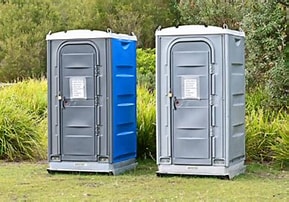
Mobile or Portable Toilet or Latrine Facilities
This shows Liberia’s high rates of water borne disease – cholera, typhoid and diarrheal speak highly of the undecorated impact of inadequate Sanitation on public health.
The Liberian Government with support from some international health partners has initiated a series of programs to address the issues of sanitation in the country. Like, the Community-Led Total Sanitation (CLTS) that was rolled-out in several communities across Liberia, including communities in Montserrado, Bong, and Margibi Counties.
These efforts intended to improve access to sanitation and hygiene services, reduce water-borne diseases, and to promote sustainable practices that protect the environment, while enhancing public health.But from the statistics on Liberia’s sanitation, its impacts of the initiatives are below the belt.
In real life, I do not want to focus on the rural areas of Liberia, when it comes to sanitation issues. Because in many parts of Montserrado County, which are just a stone throw from the nation’s capital Monrovia is deeply challenged with numerous sanitation problems. Many residents are without safe drinking water, without good sanitation facilities (toilets or latrines and bathrooms or washrooms), least to talk about Central Monrovia, West Point, Jallah Town, New Kru, Logan Town Clara Town, Doe Community, Soniewien, Plunkor, Saye Town, Famiah, the 12th Street Community, Lakpazee, Communities around Old and New Matadi Estates, etc.
West Point in Central Monrovia (One of Liberia’s Slum Communities

But as I stated above, this article is focusing on, A Look at Liberia’s Sanitation Dilemma: “With Monrovia a Case Point” because over the past years and up to present, Monrovia continues to sink very deeply when it comes to sanitation.
The sanitation challenges are from the homes in the various communities lacking good sanitation facilities to public facilities (government sanitation facilities) to the sewerage lines in the capital Monrovia.
In Monrovia studies revealed that there are 105 (one hundred, and five) public toilets available in Greater Monrovia. And the Toilets’ Directory provided a comprehensive overview of the public toilets areas. With the residents’ population in Greater Monrovia already high, coupled with the hundreds of people trooping in the Capital from Mondays to Saturdays for business activities the 105 facilities cannot serve that purpose.
So most often we see feces spilled over in Greater Monrovia with feces in plastic bags because the population is huge, and these lines cannot hold the feces and at some location offensive odors, which is an embarrassment for our capital city.
Another issue, is the open defecation (Popoo in the open) practiced by many of us. Frankly speaking, residents living along the Atlantic Ocean, used the seashores as their toilets and latrines, like residents on West Point and New Kru, including the use of abandoned buildings.
In amidst of all that are happening in Monrovia, I am not talking about the leeward counties, yes we are talking about good sanitation. Then with this are we serious as a nation and people? Today is 2026, and SDGs deadline is 2030. And we now left with four years to reach 2030. Liberians are we serious that we will have a sanitary country. From the look of things, yes Liberia signed up to SDGs Framework, but reaching that bench-mark, will bestory to tell.
In the slum communities, how many public toilet facilities do we have there for good sanitation? Because these slum communities’ population are high. For instance, Soniewien, Jallah Town, SayeTown, the 12th street Communities, Slipway, West Point, and Buzzi Quarter. All of these communities are closer to Central Monrovia.
The Way Forward to Address the Sanitation Challenges of Monrovia and other Communities
However, I could state the many challenges on Liberia’s Sanitation issues, especially Monrovia and surrounding communities, but from my little knowledge let me just put forward tworecommendations to the Monrovia City Corporation (MCC), the Liberia Water and Sewer Corporation (LWSC), and the Environmental Protection Agency (EPA). I know someone will ask what EPA has to do with this, and why I am always including EPA in my many articles.

Slipway in Central Monrovia (Another Slum Communities in Liberia)
Now, whenever, it comes to the protection of the human beings, animals, plants, fishes, water, forest, the land, the air, wetlands, proper disposal waste, chemical, biological, medical as well as industrial waste, the Environmental Protection Agency (EPA) has a big and primary role to play.
Recommendation One: looking a population which has overwhelmed the sewer lines in the city, let MCC, LWSC and EPA resort in the initiative of mobile or portable toilet facilities in selected places in and around Monrovia.
Little fees are charged as done at the public facilities we have around the city, to ensure they are kept clean, water are there for hand washing and tissues, detergent.
If those facilities cannot be remove either every day or two, let LWSC provide the trucks that get the feces out of the sewer lines be made to get the feces with mobile toilet facilities.
Recommendation Two: Stop residents along the main drainages that are opened like Soniewien and drainage crossing Lync Street from Center Street, as well as in other communities from connecting the toilet pumps to those drainages.
When rains and they are overflow, you find feces all in the nearby communities. Besides you see filies, ants and cockroaches all on the feces from the openness of the drainages that usually end up in the homes and sitting on food stuff, giving rise to health problems for us.
I do know that the sanitation conditions of Central Monrovia, and Monrovia’s Slum Communities are awful with many resident facing severe challenges, due to inadequate access to clean water and good sanitation facilities.
The Central Monrovia and slum communities are challenges because of overcrowding, poor physical conditions of housing structures, and limited access to basic sanitation facilities but with the two pitiful recommendations, we as Liberians, particularly resident of Monrovia and surrounding communities can change things around for a good sanitary conditions as ’Water is Life, Sanitation is Dignity”……A Look at Liberia’s SanitationDilemma: “With Monrovia a Case Point”.
About the author:
Mr. Jonathan O. Grigsby, Snr. is a member of the Water Sanitation and Hygiene (WAS) Reporters and Editors Network, holds a certificate in Professional Studies in Environmental and Social Impact Assessment (ESIA).
Contact: +231 7760 69170/ 231 8867 21782 or jogrigsby7@gmail.com
