
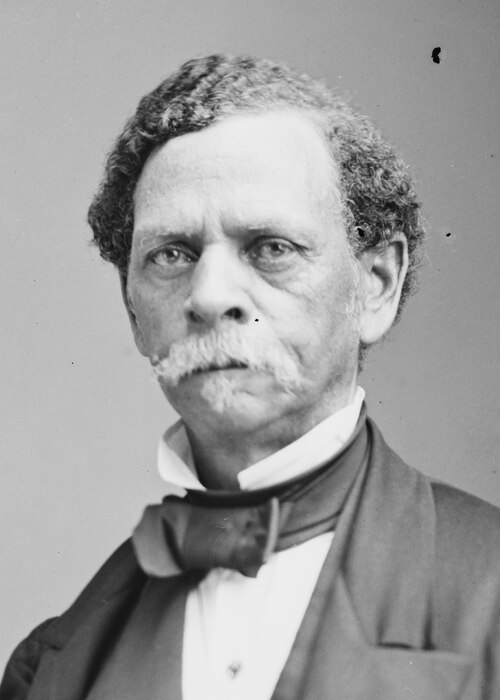
Liberia’s First President Joseph Jenkins Roberts
By Jonathan O. Grigsby, Snr. Contributor Writer
Liberia, Africa’s first independent country, became a nation on 26th July, 1847, established by settlers from the United States of America (USA), under the American Colonization Society (ACS).
However, when the settlers landed on Providence Island and moved on to the main land-Ducor, Monrovia, there were continued conflicts between the settlers and the natives (indigenous) who were regarded as illiterates and uncivilized, which degenerated into today’s division.
This period of division lasted for about 133 years, especially with the settlers’ dominance in governance up to April 12, 1980 when that rule ended when 17 enlisted men of the Armed Forces of Liberia (AFL), led by Master Sergeant Samuel Kanyan Doe, dethroned President Rev. Dr. William R. Tolbert, Jr., a son of the settler.
The military coup brought to an end the True Whig Party (TWP), which held to the helm of state power for over one hundred and thirty-three years (133) from 1878 to 1980.
Over the years, the division was between the natives and the settlers (the likes of former Presidents Joseph Jenkins Roberts to Arthur Barclay, including other elites serving in key government positions during that period).
Later, that division crept into Liberia’s political landscape from the Americo-Liberians, including William V.S.Tubman and Rev. Dr. William R. Tolbert, Jr., and others, through what was termed as the “Assimilation Theory” at the time, until the coup resulting into the death of some high-ranking settlers and family members who served in government, thus widening the division gap.
The division then, took a dramatic and complex dimension, shifting from settlers versus natives to a tripartite shape, i.e. settlers-trained natives versus natives, Americo-Liberians vs Americo-Liberia (who some of them originated from natives), and the Americo-Liberians vs the natives.
Assimilated natives who could narrow the gap, too began at each other’s throats.
As the years progressed, the division has continued to some extent up to date, and has deepened primarily driven by the so-called politicians and ruling elites who exploit ethnic, and regional, identity links for selfish political aggrandizement.
Nowadays, politicians always use tribal, regional and historical affiliations to rally support and divide the population, mainly the ordinary citizens. Instead of rallying the population on the ideas of national development and co-existence, they frequently push tribal sentiments and the short-lived political party affiliations.
Whenever a politician ascends to state-power,what we often hear is, “That’s Our Time”. Other Party Stalwarts statements are, “When we Win, Party X Members will not Work in Our Government”. Do these statements speak of unity or division? I believe they are divisive. Who are then dividing us (Liberians) – the Politicians? Yes.
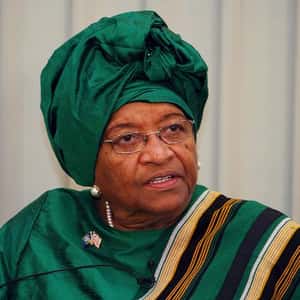
The country’s governance structure continues to witness exclusivity. It favors some partisans of political parties, especially the ruling party, leaving non-affiliates marginalized. From another sphere, exclusion and the lack of equitable resources distribution by the governed fuel distrust amongst the ordinary people.
In 1964, Former President William V.S.Tubman initiated “The National Unification Policy that is observed on May 14 each year in Liberia” in an effort to bridge the gap of divisions amongst the Liberian people. But I may consider the National Policy as mere lip-service, mainly between the Politicians.
Who are those responsible for fueling divisions amongst Liberians?
From the look of things, as were mentioned above,the Politicians and the Ruling Elites are the key instigators of Liberia’s deepening division. And on the other hand, it is the same politicians, who are also speaking against division, who are not making any efforts to unite the people in their words and actions.
Interestingly, whenever they (politicians) are not part of the ruling Elites, they talk much more about how Liberians are divided, pointing accusing fingers and continue to blame those in power for creating the division. On the contrary, when those who were accusing others for deepening Liberians’ division are opportune to step in, you will never hear them talking about division.
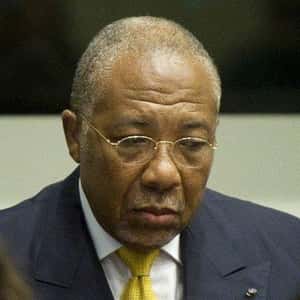
In line with the more deepening division, some eminent individuals in Liberia and out of government have spoken against such division. The latest is Former Vice President Jewel Howard–Taylor “Warned that the country remains unreconciled because successive governments fail to govern inclusively, creating opposing blocks firmly standing on partisans’ side”. So, if we cannot reconcile our differences from the political, religious, and ethnic, as well as party affiliations, can there be unity? No.”
The majority of citizens continue to struggle with youth unemployment, poor infrastructure, and lack basic services like electricity, which fuels resentment against the political class. So Former Vice President Jewel Howard–Taylor’s statement drew the line that indeed it is “Politicians” who are dividing Liberians.
International Partners Interventions
Since the Liberian civil war of 24 December 1989 ended in 2003 with the help of regional, continental and global organizations, including friendly countries, many steps have been taken to ensure Liberians are reconciled, live in a cohesive country, for them to foster and maintain a peaceful Liberia, where rule of law will be upheld, and for sustainable development can flourish for us all. Truly, these efforts may help but the actual division can be addressed by Liberians, themselves mainly from the “Politicians and Ruling Elites.”
How can Politicians Unite Liberians to Break the Chain of Division
I do agree with Former Vice President Jewel Howard-Taylor that successive governments have failed to unite the people of Liberians by creating division. And who are those in governments – “The Politicians”.
I also do know, we too as ordinary Liberians have a part to play in uniting us as one people, one nation and one destiny, but there are few suggestions I could put forward for us all to read through and take into consideration from the Politicians Angle.
The suggestions include: engage in dialogue, focus on national goals, promote inclusive participation, and promote peace and dialogue as well as addressing disputes and mis-information.
With these suggestions, I believe politicians can unite Liberians because they will focus on the common good, engage in dialogues that transcend political party affiliation and foster national unity, which can break the chain of deepening the division.
Engage in dialogues: Politicians must engage in meaningful dialogues with the divers groups to address common concerns to foster unity.
Focus on National Goals: Politicians must prioritize national goals and ensure that their policies and actions align with these goals, which can help build a sense of community with shared purpose.
Promote Inclusive Participation: Politicians must encourage inclusive political participation, especially among women and youth, to ensure that all voices are heard and considered in decision making processes.
Address Disputes and Misinformation: Politicians must actively address potential disputes and misinformation related to electoral issues and tensions, creating an environment conducive to peaceful participation.
Promote Peace and Dialogue: Politicians must promote peace and dialogue as essential for national strength and security, setting aside political differences to work together for the common good.
By setting in motion, these suggestions, I believe Politicians as the architects of governance and the Ruling Elites in Liberia can work towards uniting the people and building a more united and cohesive and resilience Liberia, where unity, co-existing and peace can flourish, as the line in the National Anthem: In Union Strong, Success is Sure”.
This is my little article about Liberians in the country and the Diaspora observance 179th Independence Day Celebration – Looking at who are fueling the deepening division amongst the people.
