— As CSOs Intensify Campaign to Outlaw the Practice
By Evelyn Kpadeh Seagbeh
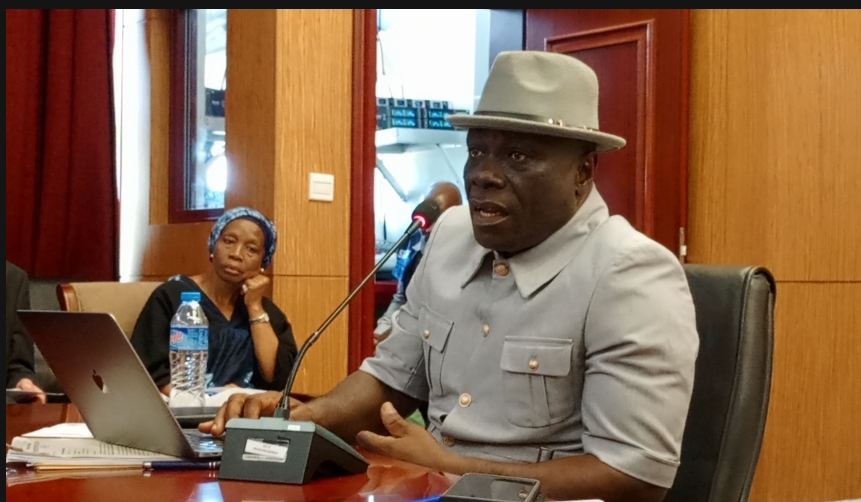
At a one-day meeting bringing together members of key Liberian civil society organizations, representatives from the United Nations Women, Nimba County District Number #2 Representative, Nyan Flomo has called for better messaging and more community awareness as they continue engagement and solicit the support of other members of the House to pass the Girls and Women’s protection Act.
The meeting was organized by the National Coalition Against Harmful Practices to engage members of the House of Representatives about protecting women and girls from harmful traditional practices.
Among the lawmakers present was Nyan Flomo, the Representative of District #2 in Nimba County.
Representative Flomo acknowledged the importance of the moment adding that protecting women and girls was not just a legal matter but a step toward dignity, equality, and justice in society.
Laws that protect women, he said, represent progress for families, communities, and the nation as a whole.
Representative Flomo then reminded the audience that progress must be handled with wisdom and that implementation must be carefully shaped.
He emphasized that the message should not be about attacking culture or traditions instead, it should focus on protection, human dignity, and respect.
“When communities hear messages delivered with respect and understanding, they are more likely to participate in meaningful dialogue rather than react defensively.” He noted.
The goal, according to him, was to help people understand that protecting women and girls strengthens families, preserves communities, and supports national development.
In Liberia, traditions run deep and play a powerful role in community life while Laws do not exist in isolation rather function within social structures and long-standing cultural practices.
According to the Nimba lawmaker, reform efforts should not ignore traditional institutions but instead work with them noting that respected traditional platforms such as women’s cultural societies have long served as places for social education and community guidance.
If these institutions and their leaders are respectfully engaged, according to him, they can become powerful partners in promoting health, safety, and empowerment for women while maintaining community unity.
He said real reform cannot be created only in government buildings, communities must feel that their voices matter urging lawmakers to go beyond the capital and hold structured consultations in towns and villages stressing the need for inclusive consultation.
This kind of participation, according to him builds trust, helps ensure that policies reflect the real experiences and needs of the people they are meant to serve.
The District #2 lawmaker highlighted that legal reform alone is not enough saying communities also need education, healthcare access, economic opportunities for women, and empowerment programs that give families alternatives and hope for the future.
True reform, he said, must be firm in defending rights, thoughtful in its messaging, respectful of culture, and inclusive of every community voice.
For about two decades, women’s rights organizations and civil society groups in Liberia have led sustained campaigns to end Female Genital Mutilation (FGM), which many health and human-rights organizations consider a harmful traditional practice affecting women and girls.
Advocacy groups such as the Women NGOs Secretariat of Liberia (WONGOSOL), the Association of Female Lawyers of Liberia, and other grassroots women’s organizations have organized nationwide awareness campaigns, community dialogues, and legal advocacy aimed at protecting girls and promoting alternative rites of passage.
These organizations have worked closely with government institutions and international partners to educate communities about the health risks and human-rights implications of the practice. Their efforts have included supporting survivors, engaging traditional leaders, and advocating for national legislation that would permanently outlaw FGM.
In recent years, the movement has also focused on community-based solutions, including economic empowerment programs for former traditional practitioners and campaigns promoting what advocates call “initiation without mutilation.”
Several counties have held ceremonies where practitioners publicly surrendered their cutting tools as a symbol of abandoning the practice.
Despite progress, FGM remains present in some rural communities, particularly among girls between the ages of five and fourteen, making continued advocacy and legislative reform a priority for women’s groups and human-rights activists.
The proposed Women and Girls Protection Act is a landmark bill intended to strengthen legal protection for women and girls in Liberia, particularly by criminalizing FGM and other harmful practices.
The legislation was submitted to the National Legislature of Liberia in 2025 following years of advocacy from civil society organizations, women’s rights groups, and legal experts.
If enacted, the law would establish penalties for individuals who perform or facilitate FGM, while also providing protections, support services, and access to justice for survivors.
Advocates say the Act would align Liberia’s domestic laws with international human rights commitments, including agreements aimed at eliminating gender-based violence and protecting women’s rights.
Supporters view the legislation as a major step toward safeguarding the dignity and health of Liberian women and girls, while also addressing long-standing gaps in the country’s legal framework concerning harmful traditional practices.
