




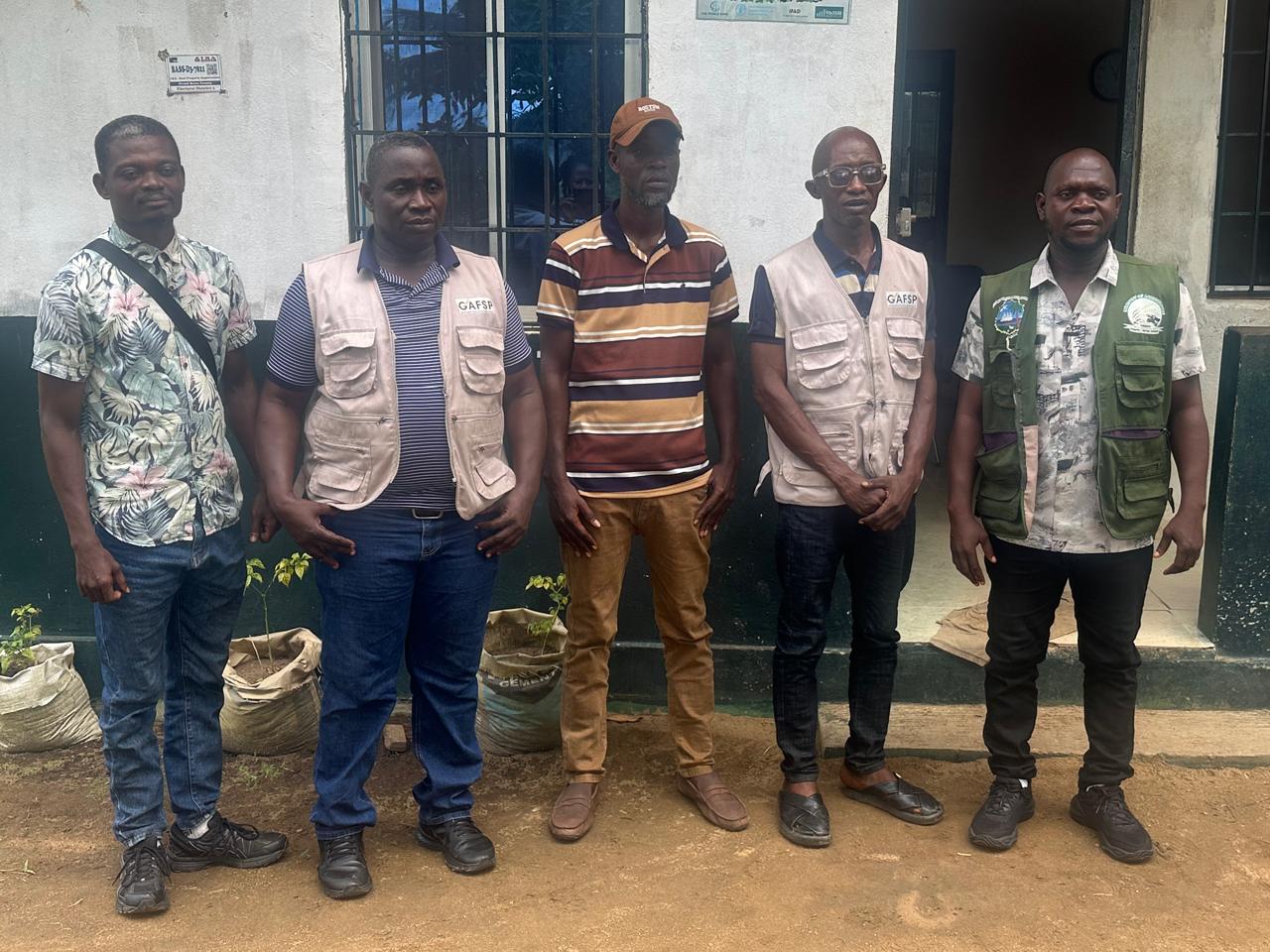
Buchanan -The County Agriculture Coordinator (CAC) of Grand Bassa County, Joseph G. Greaves, has outlined major achievements as well as critical challenges facing the ongoing implementation of the Smallholder Agriculture Development for Food and Nutrition Security (SADFONS) project.
An initiative aimed at boosting food production, building farmer capacity, and strengthening nutrition outcomes across rural communities.
In an exclusive interview recently, Mr. Joseph Greaves described the project’s progress as “encouraging but constrained,” citing the delivery of essential farming equipment as one of the most notable successes recorded so far.
Greaves disclosed that farmer groups have received a cassava processing machine, commonly known as the carava, along with a modern combine harvester intended to enhance rice production efficiency and reduce post-harvest losses.
According to the Coordinator, these machines are already helping farmers transition from traditional, labor-intensive techniques to more mechanized and productive systems.
The Grand Bassa Agriculture Coordinator stressed that the equipment is making a difference in the communities noting that mechanization remains central to improving yields and strengthening local food systems.
The project has also invested significantly in human capacity development as well as field staff and lead farmers recently completing a series of training sessions with a focus on Monitoring and Evaluation (M&E).
The trainings emphasized data collection and reporting skills that the CAC said are essential for tracking outcomes, ensuring accountability, and improving future planning.
Despite these gains, the CAC admitted that the SADFONS project is facing serious obstacles, particularly those related to climate change.
He highlighted increasingly unpredictable rainfall patterns, shortened dry seasons, and delayed planting periods as major disruptions to farming activities.
“Timely intervention is critical. When the agricultural calendar is affected, everything else falls behind. For 2025, we were supposed to cultivate 60 hectares of lowland rice, 20 hectares of cassava, and 5 hectares of vegetables. We have not reached those targets yet. Combining 2025 and 2026 work is going to be a heavy burden.” Joseph Greaves maintained.
The CAC revealed that the project is already lagging behind on its 2025 cultivation targets.
He further that although all required farmland for the 2025 cycle has been identified for clearing and layout, no physical work has started, a situation the Coordinator fears will place additional pressure on manpower, timelines, and already overstretched resources.
In addition to climate and logistical challenges, Greaves underscored the urgent need to strengthen leadership and management capacity within local farmer organizations.
He stressed the importance of proper record-keeping, improved oversight of project materials, and stronger internal coordination.
Mr. Greaves noted, “Farmer cooperatives must be equipped to manage resources effectively. Accurate sales records and transparent monitoring systems are key to the long-term sustainability of these groups.”
Meanwhile, the CAC remained optimistic, insisting that the SADFONS project holds transformative potential for Grand Bassa’s agricultural sector.
With improved coordination, timely support, and stronger climate-resilience strategies, he believes the county can still meet its broader food-security goals.
The Global Agriculture and Food Security Program (GAFSP) was established in 2009 by G20 leaders and officially launched in April 2010.
To date, it has supported over 36 countries with a financial portfolio valued at US$2.44 billion, funding more than 320 public and private sector projects in low-income nations.
The current impact review of GAFSP-funded projects including Liberia’s SADFONS initiative is being conducted across five additional countries and led by a global civil society consortium comprising ActionAid International, the Eastern and Southern Africa Small-Scale Farmers’ Forum (ESAFF), the Asian Partnership for the Development of Human Resources in Rural Areas (AsiaDHRRA), and Coordination pour des Actions en Santé et Développement d’Haïti (COSADH).
At the same time, the consortium is assessing selected GAFSP projects to document successes, identify challenges, and explore opportunities for scaling up sustainable agricultural practices.
The review also examines how these projects address critical themes such as climate adaptation, nutrition, income generation, gender empowerment, and overall food-system resilience.
Accordingly, assessment is being conducted simultaneously in Liberia, Tanzania, Cambodia, Laos, Haiti, Burundi, and the Democratic Republic of Congo (DRC).
It seeks to determine how well the projects are meeting their stated objectives, how effectively they integrate cross-cutting issues, and the extent to which civil-society organizations are involved in implementation, farmer engagement, and strengthening community-level food security.


