
By: Jonathan O. Grigsby, Snr.
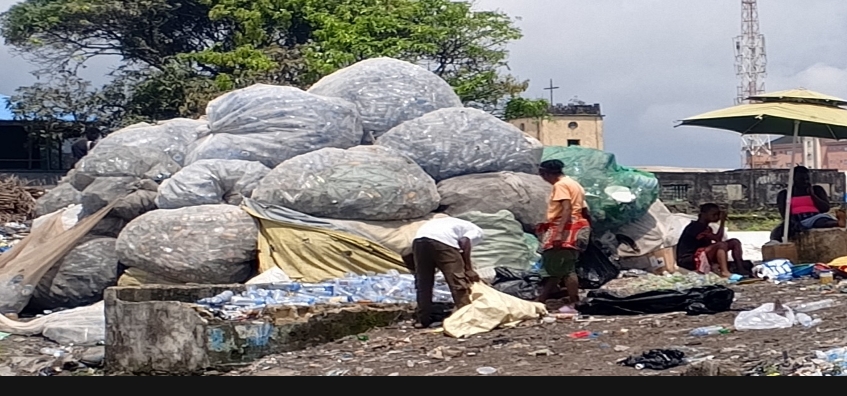
Liberia, a tiny nation situated on the West Coast of Africa, along the Atlantic Ocean, is amongst many developing countries around the world that is being eked with improper handling of plastic waste disposals, which is ravaging the country’s environment, causing hundreds and thousands of its citizenry to constantly experience disasters, mainly flooding.
Because of the high threats plastic wastes pose to the environment and human existence over the years, local and international organizations, including some countries around the world continue to take steps to address plastic wastes disposal to make planet Earth, a better place for mankind survivability.
Amongst some of the measures put in place are the banning of the use of plastic materials and introducing Recycling mechanisms on small and large scales.
United Nations (UN) Reports 2024 on Plastic Bags and Materials
On 12 July 2024, United Nations (UN) Paper Reports showed that 91 countries in the world have passed some sorts of full or partial ban on plastic bags or plastic materials being used or prevented from entering their various countries.
The Reports revealed that, while plastic bags ban are especially popular in Africa, a majority of the 26 countries, which have opted instead to charge a fee (or tax) to limit plastic bags use, are located in Europe. But according to the UN Reports, their number has been decreasing, as more and more countries on the African Continent, for example, smaller and thinner bags, which are more likely to end up in the environment, are less likely to be reused.
Let me not focus on Western Countries because of their sophistications, they are handling their plastic wastes, but my axial is partly on the Continent of Africa, particularly Liberia.
For instance, Greenpeace, in its 19th May, 2020 publication indicated that out of the 54 nations on the African Continent, 34 have barred the used of plastic bags or plastic materials and Eritrea, an East African Country in 2005, was the first nation in that part of the world to adopt an outright ban on plastic bags.
Some of the 34 African countries are Kenya, Rwanda, Benin, Tanzania, Eritrea, Senegal, and Cote d’Ivorie, including Tunisia, Madagascar, Mauritius, Botswana, Burkina Faso, Democratic Republic of Congo and Togo.
Despite the banned, many African countries are not maintaining the ban of plastic bags or materials usage, except for Rwanda.
For now, Rwanda is a ‘Shining Star’ on the continent, instituting in 2008 a national ban on non-biodegradable plastic bags. The ban prohibited the manufacture, use, importation and sale of plastic carrier bags. Travelers in Rwanda headed for Tanzania faced similar ban, they are not allowed to bring plastic carrier bags into that country.
Rwanda also introduced ‘Umuganda’, a community clean-up held on the last Saturday of every month, similar to what we called ‘Mary Broh’s Day’, the first Saturday in Monrovia. This is one of the reasons Rwanda is renowned, cleanliness, especially the capital, Kigali. In October 2019, Rwanda became the first country in Africa to issue a complete ban on all single-use plastics.
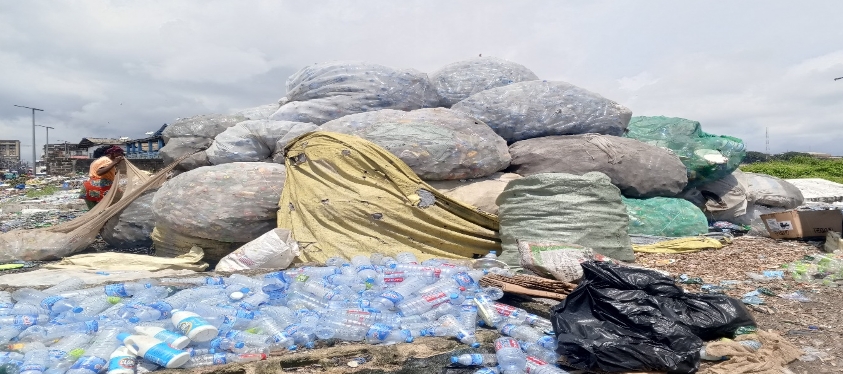
Liberia’s Plastic Bags and Plastic MaterialsHere, in Liberia before the civil war, paper bags and other paper materials were used but in the midway of Liberia’s unrest up to present, plastic bags and other plastic materials have taken over the country.
The plastic bags or plastic materials are causing a very serious problem for our environment–the waterways, wetlands, beachfronts and the fertile soil for agriculture purposes.
Environmental studies opined that plastic bags or materials take up to several decades or centuries for some to decay, depending on the types of plastic materials. But as a country, I strongly believe that we cannot easily ban the use of plastic bags and plastic materials because they are frequently used in all our business transactions.
The experiences range from the parceling of food, water, and other non-food item in sachets. Plastic bottles which contained mineral water, soft drinks, including juices, and even alcohol beverages produced by companies including the Liberia Cocoa Cola Bottling Company, also pose serious challenge for us.
But what I think we can do with those plastic materials is to engage in: “A Massive Recycling Initiative”, as it will definitely help Liberia to address the widespread plastic bags or plastic materials that are rapidly overwhelming the country.
Everywhere across the country are plastic bags or plastic materials. Construction of Recycling Plants and their Importance.
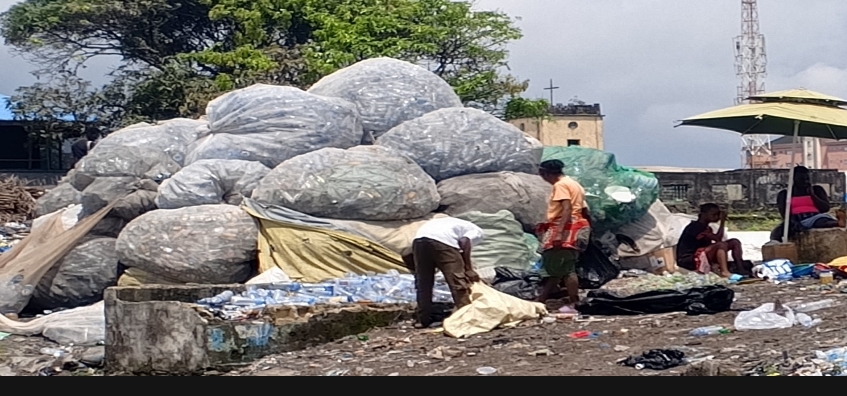
What is a Recycling Plant
A Recycling Plant is an industrial facility that processes waste materials into reusable raw materials, playing a crucial role in reducing landfill waste and promoting sustainability.
It is a specialized facility designed to sort, clean and process various types of waste into new, reusable materials. The Plant is an essential component of the circular economy, which aims to minimize waste and make the most of resources.
The recycling process typically involves several strategies – collection, sorting, cleaning, processing, and manufacturing new products from recycling materials.
Today, recycling is one of the key methods many Western Nations used to adequately address the issue of plastic waste or plastic materials and others items, transforming them into new useful materials.
Recycling helps in collecting and processing materials that would otherwise be thrown away, and turning them into new products. It is also converts waste materials into new materials that can be sold, economic empowerment for locals, residing in various communities.
Environmentalists point to recycling as a key component of modern waste reduction, which Western Nations are making maximum use of in reducing their waste (plastics, irons, and etc.).
Moreover, recycling is important because it can benefit communities, the economy, and environment, and create income for the people. For example, the collection of old iron materials and old rubber materials around the world as scraps, which are turned into new products and are sold, is another means.
Today, in Liberia, there is a Scrap Association, and that Association engages in the process of collecting old iron materials for ‘Recycling’ purpose. Today, we are not seeing too much of old rustic iron around us, including zincs, old rubber chairs and rubber slippers, because they are collected and sold to scrap dealers, who later shipped the scraps to other countries and are turned into useful products.
How Liberia Can Begin the Recycling Initiative
For Liberia, which is deeply sinking in plastic waste problem, to jump-start the massive recycling initiative, it requires three main agencies of government and others responsible associations to act.
They are, the Environmental Protection Agency (EPA), responsible to ensure our environment in all spheres of life is good, the Monrovia City Corporation (MCC), and the Paynesville City Corporation (PCC), and by extension all City Corporations of the leeward counties, responsible for the tidiness of the various cities across the country.
The total involvement of residents is also key in the process, because most of the wastes are generated by them. Seriously speaking, Liberians need continuous massive awareness on how danger plastic bags or plastic materials are to us humans, animals, fishes, wetlands, waterways, and beachfronts because most of the population are not in the know.
Firstly, EPA, MCC and PCC should engage entities involve in the production of plastic bags or materials, to include recycling in their operations as a means to limit the spread of plastic waste.
Besides, the Liberia Marketing Association (LMA) should get involve in the proper handling of waste, especially plastic bags or other plastic materials, because marketers are consistently using these plastic materials. They too need to be educated in the handling of plastic bags or other plastic materials by separating them from their waste, and their waste must be monitored and supervised by Community Based Organizations (CBOs) in communities where markets are situated.
Other areas of focus in handling plastic materials are cook shops, mini restaurants, and hotels. Now, soft drinks and other canned materials, are not frequently seen at dump sites around the Monrovia and its environs, because they are being collected and recycled. These canned materials are now used to fix pots and other alumina products.
Secondly, Let EPA, MCC and PCC mandate the various CBOs to separate plastic bags or plastic materials from the waste they are collecting to be sold to plastic producing companies.
Furthermore, create additional CBOs for only the collection of plastic bags or plastic materials, and have them sold to various companies involved with the production of plastics materials.
Besides, let the CBOs, which are collecting waste for residents embark on a campaign to educate residents on how to properly handle their plastic bags or plastic materials, thus separating other wastes from plastic materials.
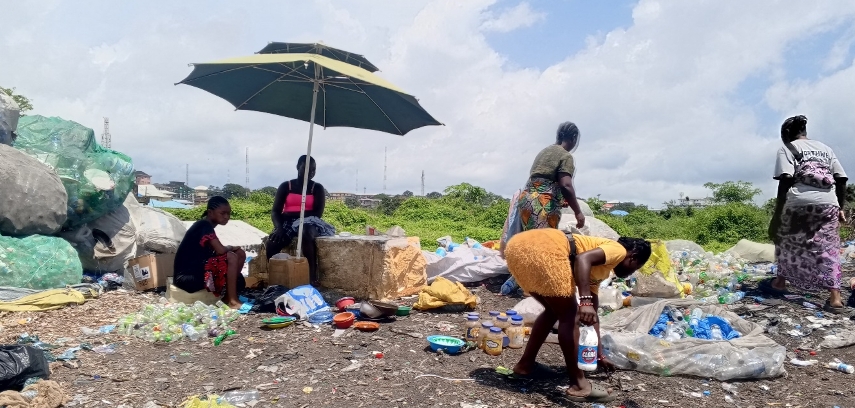
This initiative will also help to curtail or control the widespread of plastic bags or plastic materials in communities and around the country. Some Liberians are in locally Recycling Business Already, some local marketers are carrying out the recycling process by collecting water bottles and other plastic materials to be used for selling their vegetable or red oil, sour milk and other things. Their collections also include other bottle-liked materials.
Also the Government of Liberia two holding sub-stations for waste in Fiamah, Sinkor, and at the Stockton Creek in Gardnerville on the Japanese Freeway, have to be involved in the separation of plastic bags and plastic materials from the waste, have them packed and sold to various plastic-producing entities.
What would happen when Plastic Wastes are Properly Handled?
Finally, by doing so, it will greatly reduce the plastic materials from reaching the landfills, only allowing perishable waste at the landfill. Like that the landfills will be used for a longer period, without it getting fill up.
At the Wein Town Landfill, one of the key challenges is the too much of plastic materials dumped there. I do believe that when recycling plants are constructed, and both residents, and business entities began to properly handle their waste, the widespread of plastic materials will drastically be reduced across Liberia, mainly in the cities.
This is my little thought on the widespread of plastic bags and plastic materials in Liberia…… as Recycling Plants: The Surest way to Reduce Plastic Wastes in Liberia.
