
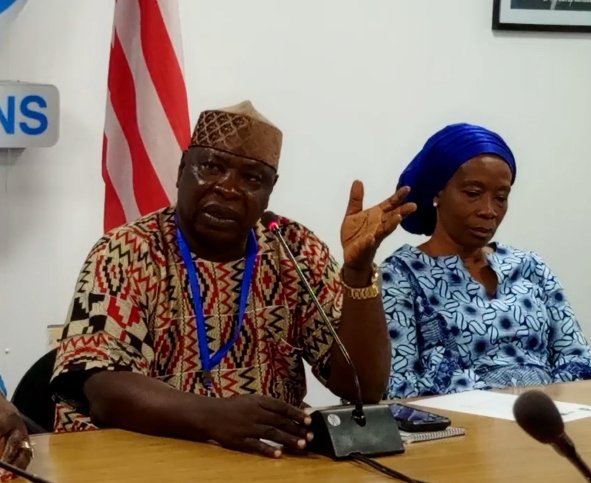
At a one-day partner meeting organized by the National Coalition Against Harmful Practices at the One UN House in Monrovia, William Jallah, Director at the Ministry of Local Government, reaffirmed the government’s commitment to working with stakeholders to address harmful traditional practices in the country.
Jallah thanked development partners and civil society actors for their continued efforts in the fight against practices such as Female Genital Mutilation (FGM), noting that the government cannot tackle the issue alone.
He emphasized the importance of collaboration, describing the gathering as a crucial step toward strengthening partnerships and aligning strategies.
He acknowledged that Liberia remains a deeply cultural society, where long-standing traditions influence everyday life.
However, he stressed the need to distinguish between positive cultural values and harmful practices that negatively impact women and girls.
According to Jallah, the government, under the leadership of the President, has already expressed its commitment to ending harmful practices.
He highlighted the importance of promoting alternative, positive cultural practices that protect the rights and well-being of girls while preserving Liberia’s cultural identity.
He also underscored the role of community engagement, particularly with traditional leaders and practitioners, in driving change.
Engaging chiefs and local stakeholders, he said, is essential to ensuring that efforts to end harmful practices are understood, accepted, and sustained at the grassroots level.
Also, at that high-level meeting to address and strengthen partnership to combat Female Genital Mutilation (FGM) in Liberia, UN Women country Representative, Comfort Lamptey, called for urgent, coordinated action to end the practice.
She then applauding civil society organizations for their sustained advocacy over the years, noting that their efforts have brought the issue to national prominence.
“We’re not starting this process of advocacy now, you’ve done so much that has really brought the issue of FGM to the fore,” she said.
Lamptey also commended the President for his public commitment to outlaw FGM, describing it as a bold and necessary step for national development.
“This is central for Liberia’s development and all of us here want to support the president’s vision,” she emphasized.
Highlighting the urgency of the moment, she warned that the window for legislative action is narrow.
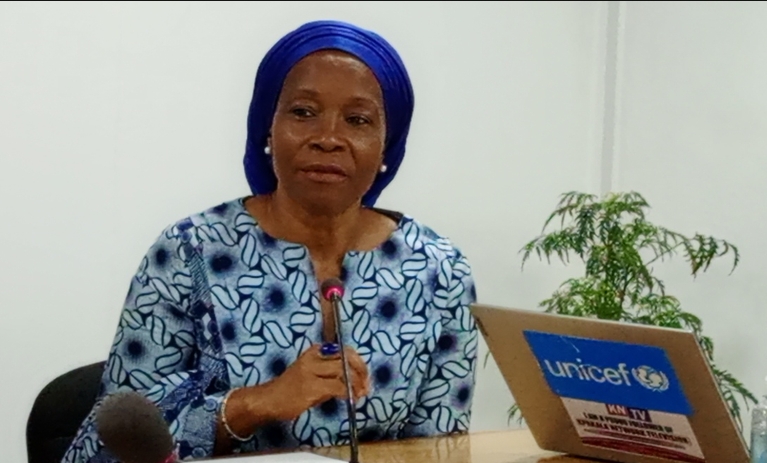
“If we are not able to pass the FGM law this year, by next year people’s attention spans will go elsewhere into elections. That advocacy efforts must be time-bound and strategic.” she cautioned.
While underscoring the importance of passing the law, Lamptey made it clear that legislation alone is only the beginning.
“Passing the bill is just the first step. Phase one is passing the bill. Phase two is getting people to know what the bill is. Phase three is monitoring implementation,” she outlined.
She further called for unity in messaging among all stakeholders, warning against mixed signals that could weaken the campaign.
“All of us have to be saying the same thing. It cannot be that one institution says something different from another,” she said.
Lamptey also urged advocates to expand and decentralize their outreach efforts by engaging grassroots networks and credible community voices.
She wants the advocacy to be decentralized thus bringing rural women’s networks and women who have been through the practice to speak adding that who delivers the message is just as important as the message itself.
Reinforcing the broader goal, she concluded with a powerful reminder of what is at stake:
“We want to make sure that all girls can grow up in dignity and no girl’s rights are violated in a way that harms her health or future.” She noted.
She expressed confidence that with coordinated action, clear messaging, and sustained political will, Liberia can make significant progress in ending FGM and protecting the rights of women and girls.
Mainwhile, Director Jallah concluded by calling for broader consultations and continued dialogue among all stakeholders.
He expressed optimism that through collective action, Liberia can promote positive cultural practices, foster peaceful communities, and improve the lives of women and girls across the country.
