




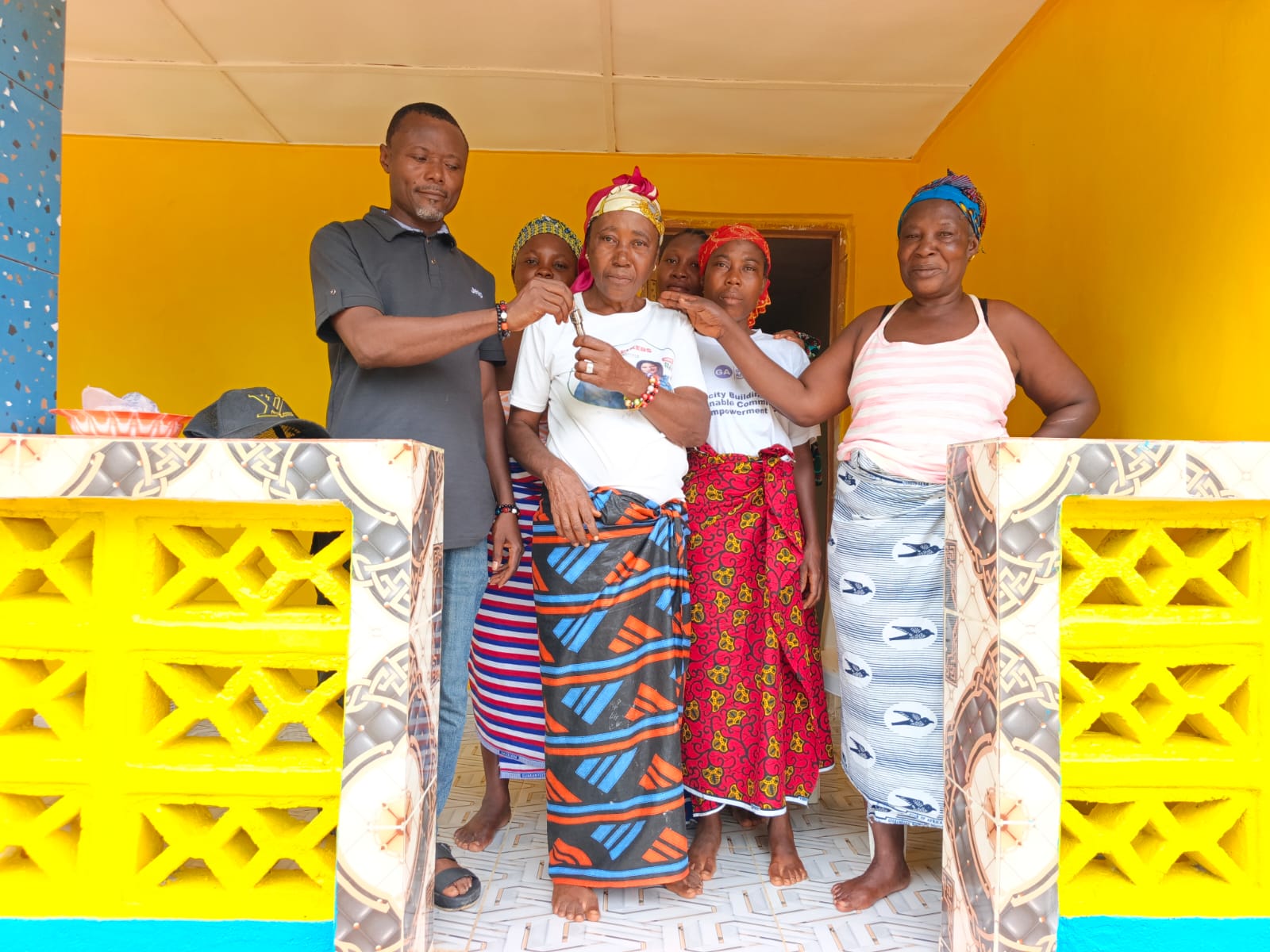
James turned over house keys to his mother
MONROVIA-For years, Messic S. Karimu endured hardship, poverty and the lingering effects of life in one of Liberia’s most neglected communities. On Monday, those years of sacrifice were rewarded when her son, Liberian journalist James M. Karimu, dedicated a newly built and fully furnished two-bedroom home for her in the Massatine Leprosy Colony in Grand Cape Mount County.
The house, valued at more than US$13,000, was described by Karimu as a “dream come true” and a heartfelt expression of gratitude for the sacrifices his mother made to ensure the survival and success of her children during Liberia’s civil war.
The emotional dedication ceremony, held June 22 in the remote settlement of Massatine Leprosy Colony in Darblo Clan, Gola Konneh District, drew family members, friends and residents, many of whom praised the gesture as an example of filial love and responsibility.
Messic S. Karimu, 67, was visibly overwhelmed as she received the keys to her new home after years of living in conditions her son described as unsatisfactory. Family members and residents watched as tears of joy rolled down her cheeks during the dedication.
Karimu, in an exclusive interview with The Liberian Investigator, reflected on the struggles his mother endured during Liberia’s civil conflict between 1993 and 1996, when she became the family’s primary caregiver amid violence, displacement and uncertainty.

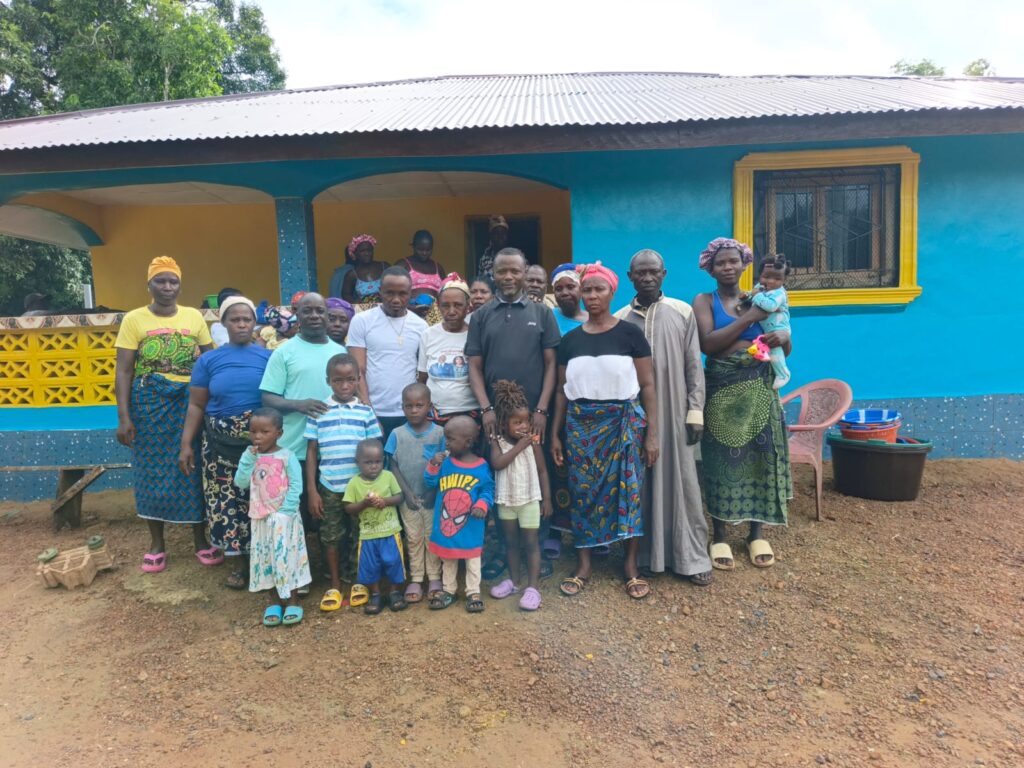
Family members and residents celebrate the change in old lady Messic S. Karimu’s life
“My mother would cook and distribute all the food to others, often going hungry herself and ‘tying her waist’ to endure the lack of food while fleeing danger,” he recalled.
He said despite attacks and insecurity in areas including Jenner Brown and Lofa Bridge, his mother consistently placed the welfare of her children above her own, ensuring they survived some of the darkest chapters of Liberia’s history.
Massatine Leprosy Colony, located in the Darblo Clan of Gola Konneh District, was established as a settlement for persons affected by Hansen’s disease, commonly known as leprosy. The community has long struggled with isolation, inadequate infrastructure and limited development opportunities, particularly following the civil war.
Determined to provide his mother with a more dignified life, Karimu embarked on the housing project, which took approximately one year and four months to complete.
The modern structure features two bedrooms, two bathrooms, a living room and a porch. According to Karimu, additional improvements are underway to further enhance the property.
A former news editor, director of news and legislative reporter who now works in media development and public relations as Media Officer at Bea Mountain Mining Corporation, Karimu said the project was motivated by a desire to repay his mother’s extraordinary sacrifices.
As the eldest of six surviving siblings from a family of 10 children and the family’s leader following the death of his father during the war, he said he hopes his actions will inspire others to care for their parents.
“I believe children should prioritize their parents’ comfort over personal riches,” he said, encouraging his siblings and other Liberians to invest in improving the lives of their parents and loved ones in rural communities.
Karimu also credited his wife, Doris Karimu, for providing vital financial and emotional support throughout the project. He further acknowledged Mohammed Daramie whom he described as a younger brother figure and infrastructure developer, for serving as a major source of motivation.
Beyond honoring his mother, Karimu said he hopes the project will inspire citizens of Gola Konneh District and other parts of Liberia to return to their roots and contribute meaningfully to the development of their home communities.
He emphasized that the house stands as a tangible expression of gratitude for the immense hardships his mother endured, particularly the sacrifices she made to ensure her children were fed even when she had to go hungry herself.
“While this development may seem like a small personal story, its propagation on a national platform is necessary to spark wider change,” Karimu said.
For residents of the Massatine Leprosy Colony, the project represents more than the construction of a house. It serves as a powerful reminder that gratitude, family responsibility and community service can transform lives and bring dignity to those who have sacrificed the most.


