
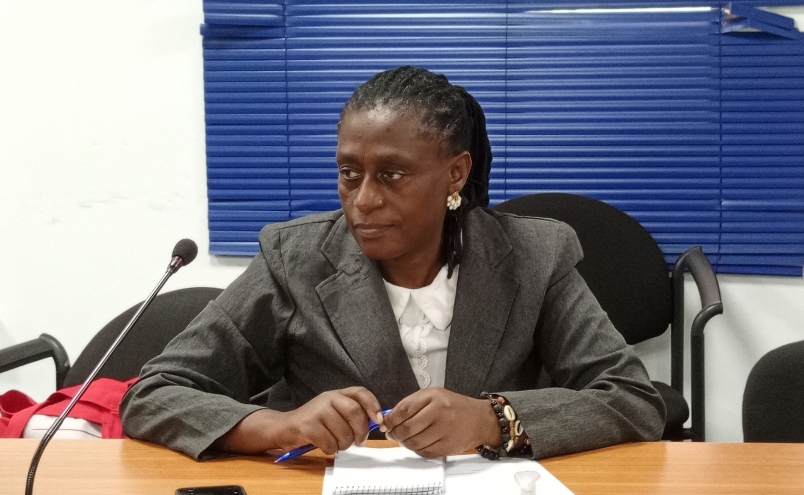
Monrovia -At a major stakeholder dialogue held at the One UN House in Monrovia in February, Deodata Mukazayire, Program Technical Specialist on Ending Violence Against Women (EVAW) at UN Women, made renew calls for coordinated action to end Female Genital Mutilation (FGM) in Liberia adding that now is the time for Liberia to go beyond temporary ban.
Speaking on behalf of the Spotlight Initiative, a joint effort of UN Women, United Nations Population Fund, and United Nations Development Programme, Deodata Mukazayire began by commending civil society actors, particularly the coalition working to end harmful practices, for developing a strategy aimed at eliminating FGM.
She acknowledged that advocacy against FGM is not new in Liberia. For years, stakeholders have raised awareness, and traditional leaders have even made public proclamations against the practice.
However, she pointed out a persistent gap between commitments and implementation.
She emphasized that while declarations are important, they often fall short when it comes to actual change on the ground.
Madam Mukazayire highlighted encouraging national efforts, including public commitments at the highest level of government to end all harmful traditional practices, including FGM.
She also referenced ongoing legislative efforts, with lawmakers working toward the adoption of a law that would criminalize the practice.
Despite this progress, she stressed that laws alone are not enough noting that effective implementation requires strong partnerships across all sectors government institutions, civil society organizations, community members, and traditional leaders.
The UN Women Program Technical Specialist expressed hope that the newly developed advocacy strategy would not only empower communities with knowledge but also strengthen political will at the national level.
According to her, ensuring that all stakeholders are aligned in support of the proposed legislation is critical.
“If there is no law, it becomes very difficult to hold people accountable or to support those who want to take action,” she explained.
She underscored the importance of legal backing in the fight against FGM thus expressing optimism about the strategy and the collective momentum building around the issue.
She reiterated the need for sustained collaboration and reaffirmed the commitment of UN agencies to support Liberia’s efforts to end FGM once and for all.
Her remarks served as both a reflection on past efforts and a forward-looking call to action urging all stakeholders to move beyond dialogue and into decisive, unified implementation.
The one-day partner meeting was organized by the National Coalition Against Harmful Practices at the One UN House in Monrovia bringing together director of Local Government formerly the Ministry of Internal Affairs, traditional leaders, civil society organizations and campaigners, the United Nations office in Liberia.
