— On Transitional Justice Principles & Accountability
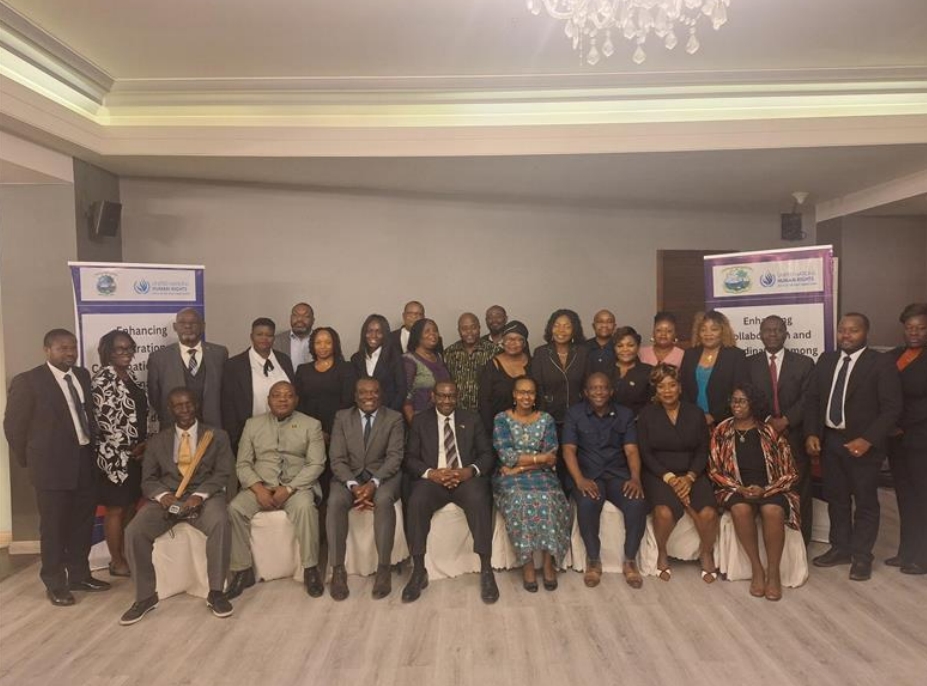
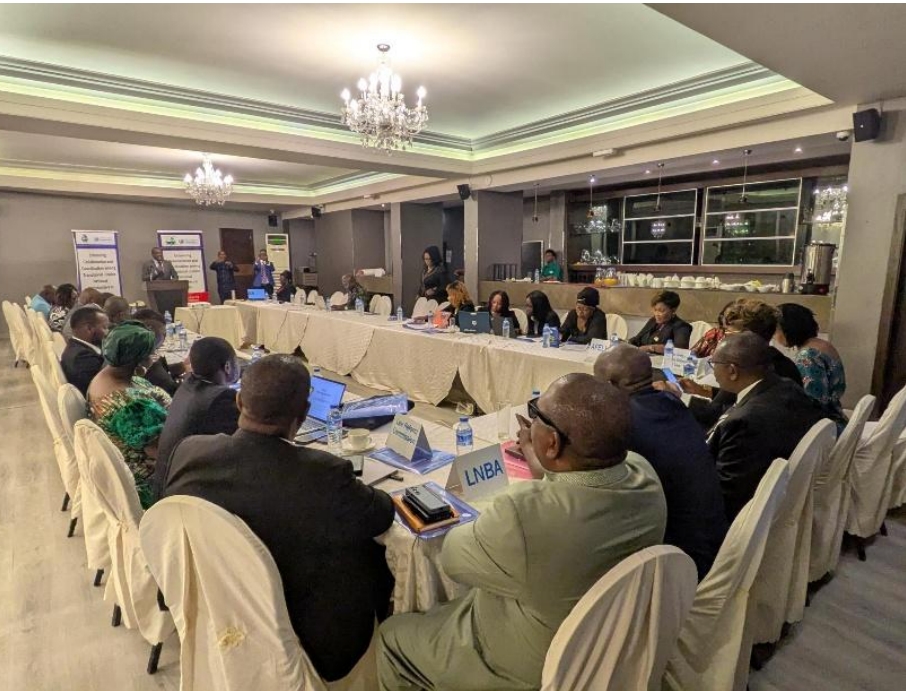
MONROVIA- Today marks the end of a two-day specialized workshop to strengthen the capacity of Liberian lawyers on transitional justice and accountability for past crimes.
The training has started on 28 January in Monrovia organized jointly by the Office of the United Nations High Commissioner for Human Rights (OHCHR), the Liberian National Bar Association (LNBA), the Association of Female Lawyers of Liberia (AFELL) and the Organization for Women and Children (ORWOCH).
The establishment of the War and Economic Crimes Court (WECC) and the National Anti- Corruption Court (NACC) moves forward, it is essential to ensure that national lawyers are equipped to contribute meaningfully to the design, implementation, and operationalization of these two courts in alignment with international human rights norms and standards, including to support victims’ participation and to uphold international due process and fair trial standards.
During the opening ceremony, the Minister of Justice and Attorney General , the representative of the Judiciary, the Law Reform Commission Chair, the Dean of the School of Law, the Executive Director of the Office for the Establishment of the War and Economic Crimes Court (OWECC-L) and the United Nations Resident Coordinator highlighted the importance of the training for the Liberian lawyers and the crucial role they play in strengthening the rule of law in the country.
Also, the Minister of Justice has reiterated the Government’s resolve to address impunity for international crimes and complex corruption-related offences.
“We are dedicated to equipping our legal professionals with the tools, knowledge and support required to provide a judicial response to international crimes and corruption-related offences aligned with international legal standards” stated the Minister.
At the same time, UN Resident Coordinator reiterated the support of the UN to the ongoing transitional justice processes in the country.
Focusing on addressing impunity for gross human rights violations and serious violations committed during Liberia’s civil crises and wars, and corruption-related offences, the two-day specialized workshop was attended by 35 selected lawyers including 20 women.
“We need to ensure the judicial mechanisms established to bring justice for the victims of the civil war are gender focused. This training is a great opportunity to equip us with the tools to ensure providing a gendered justice response to international crimes and corruption-related offences becomes a reality” shared a participating female lawyer.
More specifically, the workshop built participants’ capacity on key principles for promoting a victim-centered judicial response to gross violations of human rights law and serious violations of international humanitarian law.
These included the notions of transitional justice, the normative framework related to investigation and prosecution of complex crimes, international crimes and foundation of liability, issues related to crimes committed against children and the gender dimension in investigation and prosecution of international crimes.
The various sessions were facilitated by international experts mainly from the United Nations and national legal experts offering the opportunity for Liberian lawyers to discuss further some of the issues raised during the training.
“The strong commitment expressed by the participating lawyers to the promotion of a victim-centered judicial response to gross human rights violations, and corruption-related crimesperpetrated in Liberia, demonstrates the necessity of equipping national lawyers with the skills needed to represent victims in front of the future WECC and NACC and beyond” Mr. Christian Mukosa, Representative of OHCHR noted.
This workshop is part of OHCHR’s ongoing support to the national transitional justice process through its project aimed at strengthening the capacity of government institutions and national stakeholders for a participatory, inclusive, and victim-centered transitional justice processes in Liberia.